
Ransomware Attack: A Small Business Survival Guide for 2026
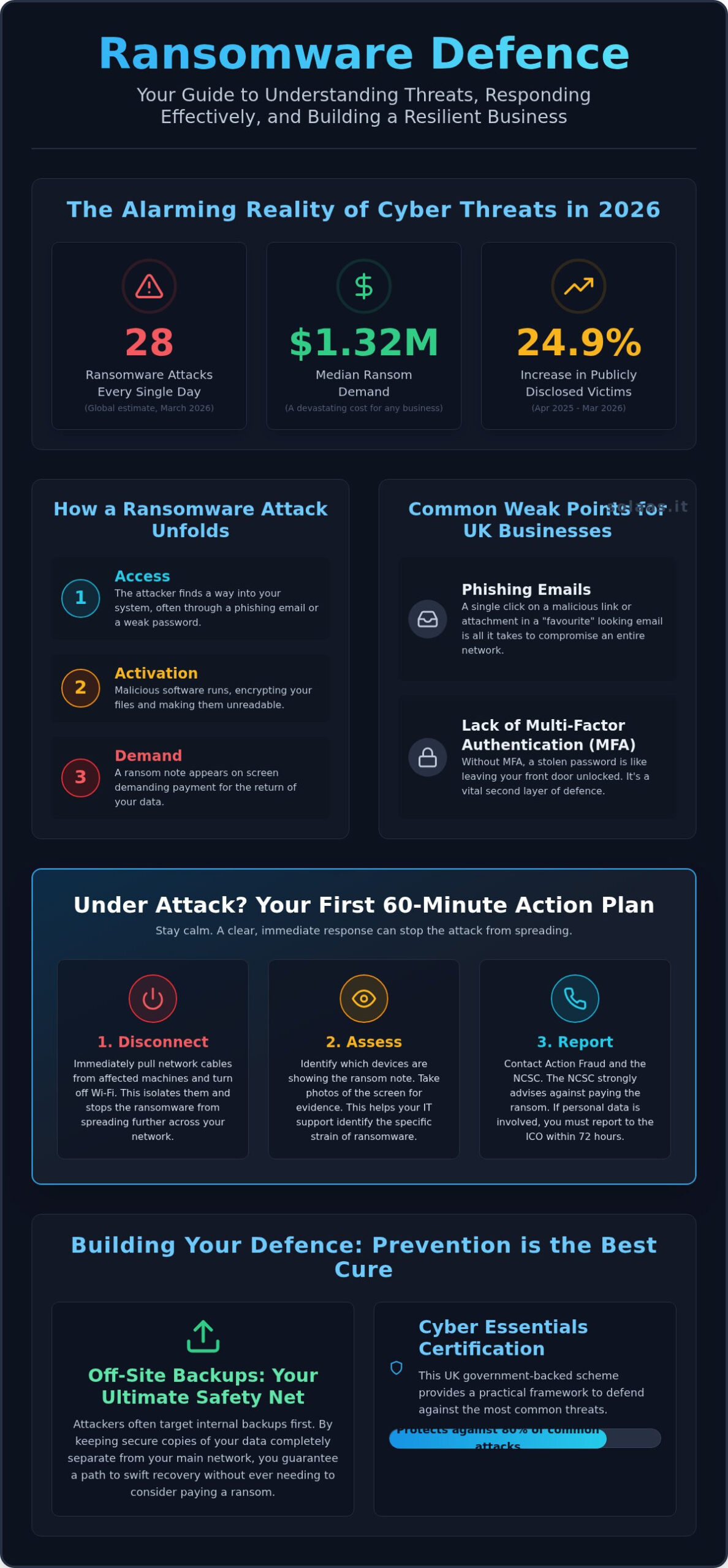
Did you know that in March 2026 alone, global businesses faced as many as 28 ransomware attacks every single day? It’s completely understandable if the thought of a ransomware attack keeps you awake at night. Between the fear of losing years of critical data and the anxiety of a median ransom demand hitting $1.32 million, the stakes for your company have never felt higher. You want to focus on growth, not on whether a single malicious link could dismantle everything you’ve built—a risk that applies to any organisation handling sensitive data, including specialised firms like Soler Realty NYC.
We’re here to cut through the confusing technical jargon and give you back a sense of total control. This guide will show you how to identify threats early, respond with a calm head, and build a bespoke defence that protects both your files and your reputation. We’ll explore the latest 2026 regulations like CIRCIA, practical steps for secure backups, and how a local expert partner can help you achieve Cyber Essentials certification to keep your operations resilient and secure.
Key Takeaways
- Understand how modern threats act like a digital kidnapping of your data and why the 2026 landscape is more stealthy for small businesses.
- Learn the vital actions to take during the first hour of a ransomware attack, from isolating your network to following the NCSC’s “no-pay” rule.
- Discover why keeping your backups off-site and separate from your main network is the only way to guarantee your business can recover.
- Explore how Cyber Essentials certification protects you against 80% of common attacks and builds trust with your clients.
- Recognise the value of having a local Midlands partner to manage your IT security, so you can focus on growth instead of technical jargon.
What is a Ransomware Attack and How Does it Work?
Imagine arriving at your office to find every file on your computer has been scrambled into unreadable code. Your spreadsheets, customer lists, and financial records are all gone, replaced by a single, chilling note on your screen. This is the reality of a ransomware attack. It is helpful to think of it as a digital kidnapping; criminals seize your data and hold it hostage, demanding a hefty payment for its safe return. Between April 2025 and March 2026, there was a 24.9% increase in publicly disclosed victims, proving that this threat is growing more aggressive by the day.
To understand how to protect yourself, it helps to look at What is a Ransomware Attack and the three stages it typically follows. First is Access, where the hacker finds a way into your system. Second is Activation, where the malicious software runs and locks your files. Finally, there is the Demand, where the ransom note appears. In 2026, these attacks are faster and more stealthy than ever, often moving through your network in minutes before you even realise something is wrong.
The Most Common Ways Ransomware Enters Your Business
Most breaches start with a simple, human mistake. A “favourite” looking email arrives, perhaps appearing to be an invoice from a regular supplier or a delivery update. One wrong click on a link or attachment is all it takes to compromise your entire network. Beyond phishing, hackers exploit weak passwords. If you aren’t using Multi-Factor Authentication (MFA), you’re essentially leaving your front door unlocked. MFA adds a vital second layer of security, ensuring that a stolen password isn’t enough for a criminal to gain entry.
Why Small Businesses in the UK are Targets
Don’t fall for the myth that hackers only go after big corporations. Small businesses are often seen as “soft” targets because they may lack the robust defences of a global firm. Criminals now use automated tools to scan thousands of UK businesses at once, looking for unpatched software or security gaps. They know that smaller teams might feel overwhelmed by technical jargon and may not have a trusted partner to manage their security. This makes SMBs an easy and profitable target for high-volume, automated attacks.
Your Ransomware Survival Checklist: The First 60 Minutes
Discovering a ransomware attack is a high-pressure moment. Your first hour determines whether you successfully contain the threat or let it swallow your entire network. Stay calm. The primary goal is to stop the malicious software from “talking” to the hacker’s server and encrypting more of your files. Every second counts, but acting with a clear plan is better than acting in a panic.
Step-by-Step Response Plan
- 1. Disconnect: Stop the spread by pulling the network cables out of any affected machines and turning off the Wi-Fi. Don’t shut down the computers entirely unless instructed; keeping them on can sometimes help experts recover data from the system’s temporary memory.
- 2. Assess: Identify which devices are showing the ransom note. Take a quick photo of the screen with your phone. This provides vital evidence for your insurance and helps your IT support team identify the specific threat.
- 3. Report: Contact Action Fraud and the NCSC immediately. UK law enforcement and the NCSC strongly advise against paying the ransom. Paying doesn’t guarantee you’ll get your data back; instead, it often marks your business as a “payer” for future criminals.
Legal and GDPR Obligations for UK Businesses
If the breach involves personal data, you have a legal clock ticking. Under UK GDPR, you must report the incident to the Information Commissioner’s Office (ICO) within 72 hours. This isn’t just about avoiding potential fines. It’s about being transparent with your customers and protecting the reputation you’ve worked hard to build. Having a Managed Cybersecurity partner helps you meet these deadlines without the stress of managing the paperwork alone whilst you’re trying to get your business back online.
Preventing the Next Attack: Building a Resilient Business
Prevention is far more cost-effective than recovery. Whilst you can’t always stop a hacker from trying, you can ensure their efforts fail. A resilient business doesn’t just rely on luck; it relies on a layered defence that makes it a difficult and unattractive target. The most critical step is moving beyond simple backups. In a ransomware attack, criminals often target your internal backups first to leave you with no choice but to pay. By maintaining “off-site” backups that are separate from your main network, or working with a specialist provider like Networking2000 to manage your infrastructure, you guarantee that your data remains safe and ready for a swift restoration.
You should also consider the Cyber Essentials scheme. This UK government-backed initiative is designed to help businesses of all sizes protect themselves. Research shows that achieving this certification can protect your business against 80% of common cyber attacks. It isn’t just a badge; it’s a practical framework that ensures your firewalls, software updates, and user access levels are all configured correctly to keep intruders out.
Practical Security Measures You Can Take Today
Start by making Multi-Factor Authentication (MFA) mandatory for every account. This simple step stops the majority of password-based breaches. Additionally, set all your business software to update automatically. These updates often contain vital security patches that close the “doors” hackers use to slip into your systems. Turning your staff into your strongest defence through regular training is equally important; a team that knows how to spot a suspicious link is your best early warning system.
Partnering with a Local IT Expert in the Midlands
Choosing Managed IT support services gives you the benefit of proactive, 24/7 monitoring. For businesses in Coventry, Leicester, and across the Midlands, SolaaS Limited provides bespoke cybersecurity that fits your specific operational needs. We take the stress out of IT security by acting as your modern, flexible partner. Our goal is to ensure you have total confidence that your data is secure, allowing you to focus on your company’s growth.
Take Control of Your Digital Security
Building resilience against a ransomware attack is about more than just software; it is about shifting your business culture toward proactive protection. By moving your backups off-site and committing to frameworks like Cyber Essentials, you transform your company from a potential target into a secure environment. You now have the knowledge to handle those critical first 60 minutes and understand why local expertise in the Midlands is your greatest asset when a crisis strikes.
SolaaS Limited is dedicated to empowering businesses in Coventry, Leicester, and Warwick with managed cybersecurity that prioritises uptime and peace of mind. We remove the complexity of technical jargon, providing you with a clear roadmap to safety. Our local support ensures that you never have to face a digital threat alone, allowing you to focus on your core operations whilst we manage the technical heavy lifting and long-term security strategy.
If you have any questions about this article and how it affects your business, please contact us.
Frequently Asked Questions
Should I ever pay the ransom to get my data back?
You should avoid paying the ransom as it is never recommended by the NCSC or UK law enforcement. Paying doesn’t guarantee that you’ll get your files back; it often encourages criminals to target your business again because they know you’re willing to pay. Instead of giving in to demands, focus your resources on professional recovery services and strengthening your defences to ensure your data remains secure.
How do I know if my business has been hit by ransomware?
The most common sign is discovering that your files have been renamed with unusual extensions and you can no longer open them. You’ll usually find a text file or a pop-up window on your desktop containing a ransom note with payment instructions. Other warning signs include your computer running unusually slowly or your security software being unexpectedly turned off without your permission.
Will my cyber insurance cover a ransomware attack?
Coverage depends on your specific policy and whether you’ve followed the security standards set by your insurer. Most modern policies require you to demonstrate a duty of care, which often includes having Multi-Factor Authentication and regular staff training in place. If you haven’t met these basic requirements, your insurer might refuse to cover the costs associated with a breach or data loss.
How long does it take to recover from a ransomware breach?
Recovery can take anywhere from 48 hours to several weeks depending on the complexity of your network and the state of your backups. If you have clean, off-site backups ready to go, you can restore your core operations relatively quickly. However, a full recovery from a ransomware attack also involves a thorough security audit to ensure no hidden threats remain in your system that could cause a second breach.

Article by
René Wheeler
René Wheeler is Managing Director of SolaaS, bringing over three decades of experience in IT and telecoms. He is a strong advocate for transparency and flexibility, championing monthly contract models that allow businesses to stay agile and in control of their technology. His approach challenges traditional industry practices and puts client outcomes first