
IT solutions for logistics and distribution centres
Downtime in logistics can quickly disrupt an entire operation. A connection failure or IT fault may interrupt picking, delay dispatch and leave teams facing a backlog. Keeping essential systems accessible and helping staff resolve problems promptly can limit the knock-on effects.
IT solutions for logistics and distribution centres can help when they are planned around how each operation works. Connectivity, joined-up systems, cybersecurity and responsive IT support all play a part in keeping warehouse and distribution teams moving.
When opening a new centre or expanding across sites, assess what your systems and teams will need, where potential bottlenecks could occur and what support will keep operations running.
Key Takeaways
- Map how your enterprise resource planning (ERP), warehouse, ecommerce and shipping systems exchange information to spot gaps that can cause extra manual work or order delays.
- Use secure, reliable connectivity and clear communication processes to help staff, suppliers and couriers stay coordinated across sites.
- Identify the core systems your operation depends on, then prioritise the ones that keep stock, orders and delivery information aligned.
- See how cloud telephony, contact centre services, managed IT and business internet connectivity can support logistics operations as they grow.
Integration of business, warehouse, ecommerce and shipping systems
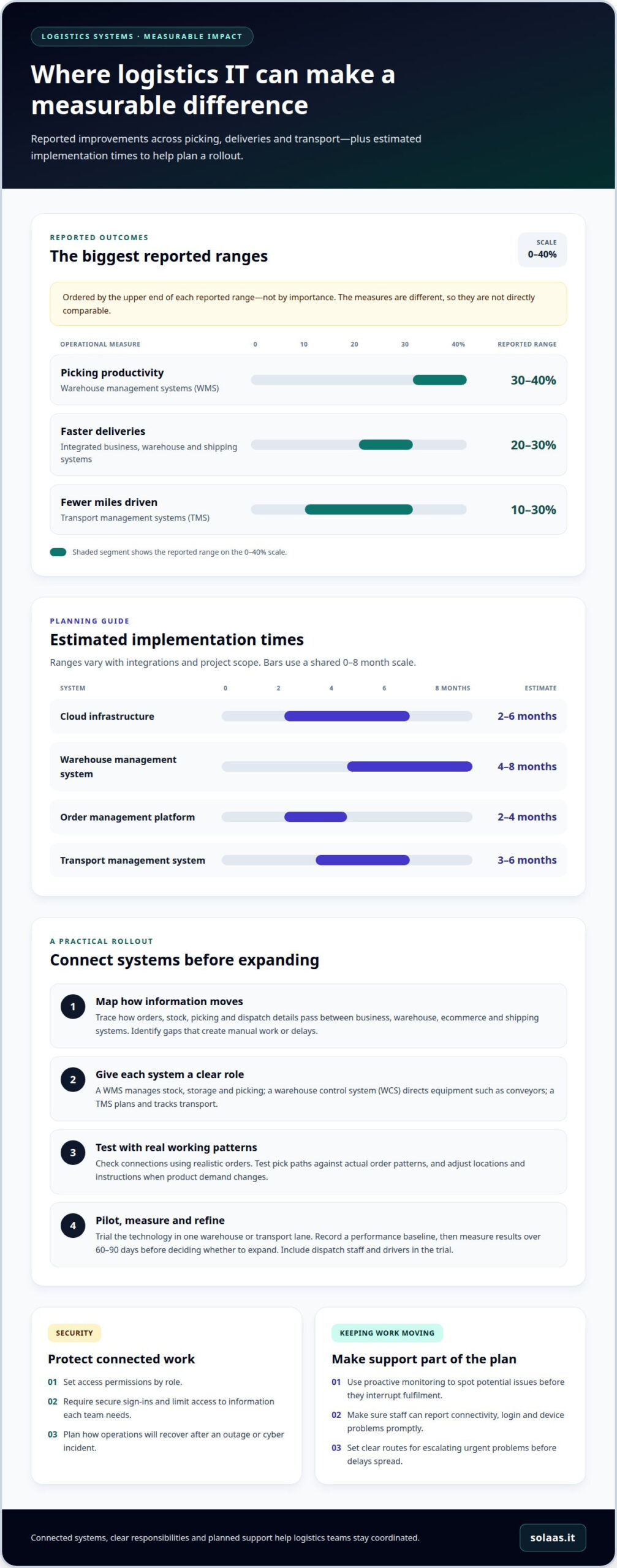
Connected systems keep stock, orders and deliveries aligned across logistics operations. For example, an ecommerce order can pass to business management software, update warehouse stock, trigger picking and send dispatch details to the shipping system. Integrated systems can help logistics companies complete deliveries 20-30% faster while maintaining lower costs.
A warehouse management system (WMS) manages stock movements, storage and picking. A warehouse control system (WCS) directs equipment such as conveyors, while a transport management system (TMS) plans and tracks transport. Each has a distinct role, so define which system handles each task and piece of information before connecting them.
Warehouse management systems can boost picking productivity by 30-40%. Pick-path optimisation helps by guiding staff through an efficient route, rather than sending them back and forth between aisles. Test routes against actual order patterns, then adjust locations and instructions when product demand changes.
Reliable connections let handheld devices access current stock and order details across warehouses, depots and offices. Online collaboration can give office teams and mobile workers a shared view of changes. Linking vehicle, warehouse and office applications can also help dispatch teams match vehicle availability with orders ready to leave.
For security planning, the International Organization for Standardization describes ISO 27001 as a set of guidelines for protecting information. Apply consistent rules about who can access information and protect it as it moves between connected systems.
UK implementation and ongoing fees depend on system scope, integrations, infrastructure and support needs. Costs are provided after a quote request, with those requirements shaping the price.
Common implementation risks include inaccurate data, systems that cannot work together, unclear ownership and insufficient staff training. Map how information moves, test connections using realistic orders, and train warehouse teams before a full rollout to reduce disruption.
Support for transport and logistics sectors
An IT outage can stop order picking, delay deliveries and leave teams clearing a backlog. Proactive monitoring can identify potential problems before they interrupt fulfilment, while a responsive helpdesk can tackle staff connectivity failures, login issues and device breakdowns. This support helps operations keep orders moving when a technical fault appears.
Transport platforms also need to work together. A transport management system can coordinate routes and deliveries, and can reduce miles driven by 10-30%. Teams can use its information to plan dispatches and respond to changing delivery needs. The useful measure is not simply whether a system is installed, but whether it gives dispatchers and drivers information they can act on.
Security is part of reliable operations. Connections with courier networks, online marketplaces and third-party logistics providers can expose businesses to phishing, supply chain attacks and data breaches. Set access permissions by role, require secure sign-ins and limit access to the information each team needs. These measures help protect connected platforms without blocking legitimate work.
To introduce new technology with less disruption, pilot it in one warehouse or transport lane. Record a performance baseline, then measure results over 60 to 90 days before deciding whether to expand. Include dispatch staff and drivers in the trial: their feedback can reveal practical issues that system tests miss. This measured approach enables teams to identify faults, refine processes and build confidence before a wider rollout.
Treat support, security and transport systems as parts of one operational plan. Clear routes for reporting issues and escalating urgent problems help teams respond before delays spread across the delivery chain.
What IT systems are essential for logistics and distribution centres?
The right systems depend on each site’s work. A typical setup connects stock, orders, transport, communications and security so teams can work with consistent information. Smaller operations may prioritise warehouse and order tools, while businesses with multiple depots may need shared cloud infrastructure and secure access for mobile staff. The most useful IT solutions for logistics and distribution centres support essential tasks without adding unnecessary complexity.
Implementation times vary by system. Cloud infrastructure implementations are estimated to take 2-6 months; warehouse management system implementations, 4-8 months. Order management platform implementations are estimated at 2-4 months, while transportation management system implementations take 3-6 months. These estimates can help with planning, though integrations and project scope also shape delivery.
Security and recovery belong in the plan from the outset. The Information Commissioner’s Office identifies GDPR as applying to logistics firms handling customers’ personal information. Set access according to each person’s role, protect business data and plan how operations will recover after an outage or cyber incident.
Communications systems matter too. Warehouse teams, drivers, suppliers and customers need clear ways to share dispatch changes and resolve order queries. A Contact Centre Platform can organise customer conversations, while business connectivity supports access to essential tools. Choosing IT solutions for logistics and distribution centres starts with mapping key tasks and identifying where information needs to move between teams.
For a practical security step, include Cyber Essentials in your systems planning. Explore Cyber Essentials services as part of your approach to protecting business systems.
SolaaS Limited: Cloud Telephony Solutions
SolaaS Limited provides Cloud Telephony Solutions for logistics businesses that need business communications to fit their operations. A Contact Centre Platform can support teams handling calls from customers, suppliers and delivery partners, while Managed IT Services and Business Internet Connectivity address wider technology and connectivity needs.
Consider these services when communication between offices, depots and customers needs a more suitable setup, or when your IT needs support alongside telephony. The right mix depends on how your teams work and which business needs you want to address.
If you have questions about how these options could affect your logistics business, contact SolaaS Limited.
Set a clear direction for your next IT decision
Give your next technology review a clear business purpose. Decide which operational challenge to address first and describe what a better working day would look like for the teams affected. This focus helps you assess whether IT solutions for logistics and distribution centres support business priorities, rather than adding tools without a defined role.
Consider how your needs may change as the business grows, adds locations or adjusts its processes. A useful discussion connects current pressures with longer-term plans, helping you set priorities while keeping the people who rely on your systems in view. SolaaS can help you explore the technology considerations that matter to your operation. To discuss your IT, connectivity or communications needs, contact SolaaS and start with the challenge that matters most.
Frequently Asked Questions
How do you minimise downtime across logistics operations?
Reduce downtime by identifying which systems and tasks must keep running, then planning how teams will respond if one fails. For example, set out how warehouse staff report a device fault, who handles urgent access issues, and how dispatch continues if an application is unavailable. Reviewing recurring faults can also reveal where maintenance or staff guidance could prevent disruption.
What is the most impactful IT solution for logistics efficiency gains?
There is no single best solution for every operation; the right choice addresses its main bottleneck. If staff spend time correcting stock discrepancies, focus on accurate inventory processes. If dispatch planning causes delays, transport planning tools may be more relevant. Compare the current process with the intended outcome, such as fewer manual handovers or clearer order status, before choosing technology.
What types of logistics businesses do you support?
SolaaS provides IT and telecommunications solutions for businesses, including small and medium-sized businesses (SMEs). Logistics businesses in Coventry, Leicester, Warwick and Leamington can discuss needs such as IT support, connectivity or business communications. The best starting point depends on the operation: a depot managing customer calls may have different priorities from a transport business whose teams work mainly on the move.
Which trends are shaping IT adoption in logistics through 2026 and beyond?
Logistics technology is moving towards connected cloud platforms, wider use of artificial intelligence (AI) and stronger security controls. AI can help teams spot unusual activity, while measures such as requiring a second proof of identity when signing in and limiting access by role help control who can enter systems or view information. Introduce changes in stages and assess how they affect staff workflows and business continuity.
How do warehouse management systems (WMS) work, and what features should UK centres look for?
A WMS records stock and directs warehouse tasks, from receiving goods to locating items and preparing orders. For a UK centre, useful features include clear stock records, easy-to-follow task instructions, handheld access for floor staff and links to systems that handle orders. Check that teams can correct errors promptly and see who made changes, supporting clearer day-to-day control.
If you have questions about this article and how it affects your business, please contact us.

Article by
René Wheeler
René Wheeler is Managing Director of SolaaS, bringing over three decades of experience in IT and telecoms. He is a strong advocate for transparency and flexibility, championing monthly contract models that allow businesses to stay agile and in control of their technology. His approach challenges traditional industry practices and puts client outcomes first