
How Much Does IT Support Cost in the UK? 2026 Pricing Guide for Businesses
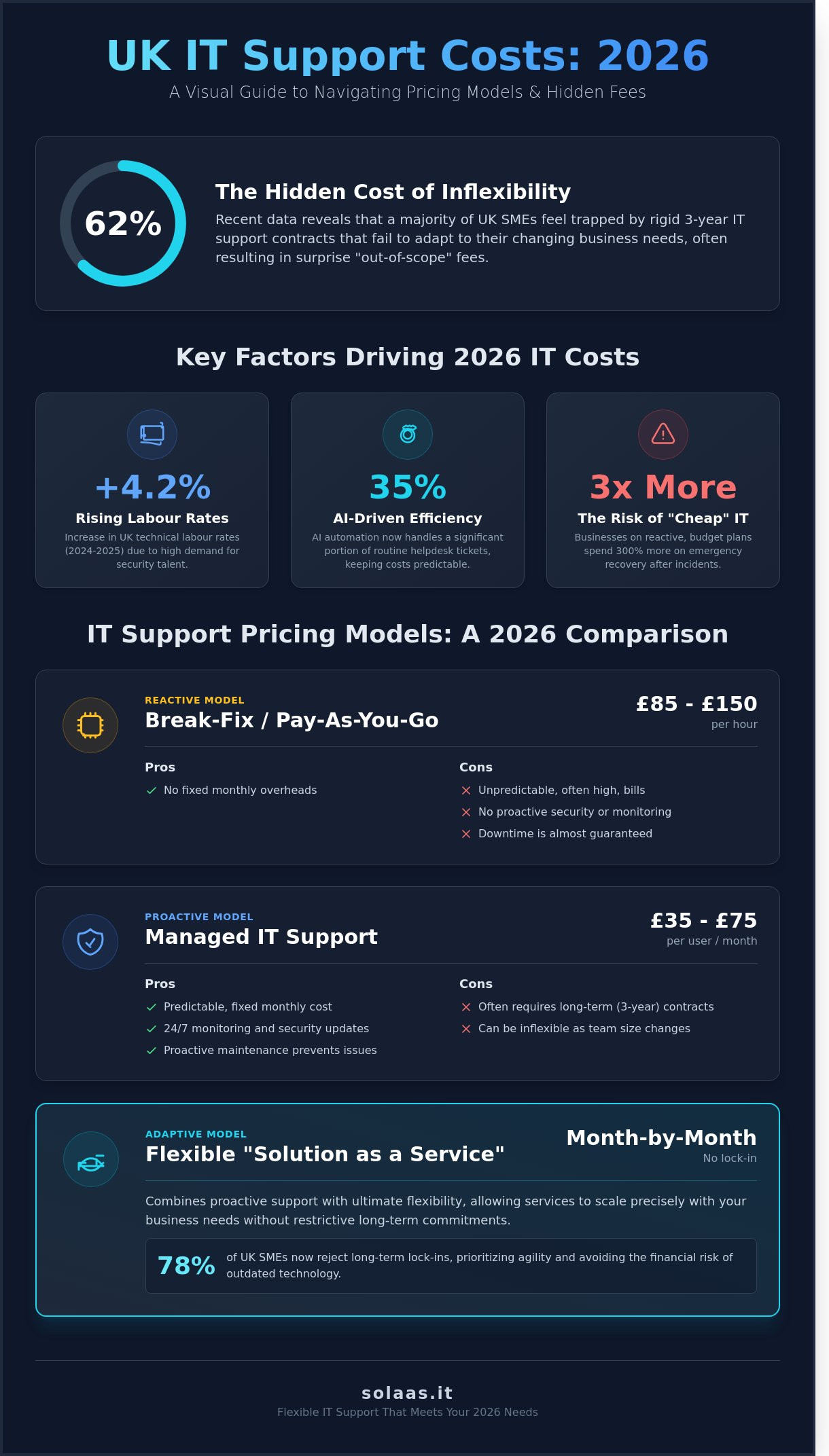
Why are you still paying for “all-inclusive” IT support that leaves you with a £450 surprise bill for “out-of-scope” work every single month? You aren’t alone; recent industry data suggests that 62% of UK SMEs feel trapped by rigid three-year contracts that fail to adapt as their team grows or shrinks. If you are trying to budget for the coming year, you need to know exactly how much does it support cost uk 2026 to ensure your technology remains an asset rather than a financial drain.
We agree that the era of hidden fees and opaque pricing must end. You deserve a trusted partner that offers the flexibility to put the reins of your communication services back in your hands. This guide provides a comprehensive breakdown of the UK IT support landscape in 2026, helping you navigate various pricing models to find the best value for your business. We will explore the ROI of managed services versus hourly rates. This will give you the tools to secure a predictable monthly spend and high-quality support that scales seamlessly with your success.
Key Takeaways
- Understand how rising technical labour rates and inflation have reshaped the landscape, helping you budget accurately for the year ahead.
- Navigate the “per user” versus “per device” debate to identify which pricing structure offers the best scalability for your specific team size.
- Gain a clear breakdown of how much does it support cost uk 2026 to ensure you are receiving competitive market rates without sacrificing service quality.
- Identify the hidden risks of reactive “break-fix” models and learn why proactive maintenance is the key to reducing long-term operational costs.
- Discover the benefits of flexible, month-by-month IT solutions that put you back in control of your connectivity and support without restrictive contracts.
The State of UK IT Support Costs in 2026
Welcome to a new era of IT. Determining how much does it support cost uk 2026 involves more than just comparing monthly invoices; it requires a deep dive into a transformed digital landscape. UK technical labour rates rose by 4.2% between 2024 and 2025. This shift reflects the rising cost of living and the scarcity of high-tier security talent. However, modern Managed Service Providers (MSPs) have integrated AI-driven automation to handle 35% of routine helpdesk tickets. This efficiency keeps your costs predictable while ensuring your team stays productive.
Choosing “cheap” IT support is a gamble that rarely pays off. Data from late 2025 indicates that businesses opting for budget, reactive services spent 3x more on emergency recovery following security incidents than those on comprehensive plans. We believe in being your trusted partner, providing solutions that meet your needs and services that exceed your expectations. It’s about value, not just the lowest price point.
Key Factors Influencing 2026 Pricing
The pricing floor has moved because of new regulatory and economic pressures. You’ll find three main drivers impacting your 2026 budget:
- Cybersecurity and Compliance: Cyber Essentials Plus is now mandatory for 60% of UK supply chain contracts. Meeting these standards has increased baseline support costs by roughly 12% since 2024.
- Hardware Procurement: Fluctuations in the global silicon supply during early 2025 led to a 10% average increase in procurement management fees.
- Hybrid Work Standardisation: Supporting a distributed workforce is no longer an optional extra. By January 2026, 90% of UK service agreements included home-office connectivity and security as standard.
Why Traditional 3-Year Contracts Are Fading
The rigid, 36-month contract is becoming a relic of the past. Business agility in 2026 demands flexibility. Our “Solution as a Service” (SolaaS) model puts the reins back in your hands with month-by-month options that scale as you grow. A 2025 survey found that 78% of UK SMEs now reject long-term lock-ins to avoid the hidden financial risk of outdated technology. If you’re stuck in a contract signed in 2023, you’re likely paying for legacy systems that don’t support the AI-driven security tools required today. Break free from those constraints and choose a partner that values your freedom and long-term success.
Comparing IT Support Pricing Models: Which is Best for You?
Selecting the right pricing structure is a strategic decision that dictates your business resilience. When calculating how much does it support cost uk 2026, you’ll find that the model you choose impacts your long-term ROI more than the initial quote. Most UK providers offer three distinct paths: reactive, proactive, or flexible.
The Break-Fix Model: Pay-As-You-Go
Break-fix is a reactive approach where you only pay when something fails. By 2026, hourly rates for ad-hoc support in the UK range from £85 to £150, often depending on whether you’re based in a high-cost hub like London or a regional centre. While the entry cost feels low because there are no monthly retainers, the hidden expenses are high. You’re effectively incentivising your provider to wait for things to break. This model only makes sense for micro-businesses with fewer than three employees who have basic IT needs and can tolerate occasional downtime.
- Pros: No fixed monthly overheads; simple “pay-for-what-you-use” logic.
- Cons: Unpredictable bills; lack of security patching; no proactive monitoring.
Managed IT Support: The “All-You-Can-Eat” Approach
Managed services are the current industry standard for stability. This model remains the baseline for determining how much does it support cost uk 2026 for growing firms. You’ll typically pay between £35 and £75 per user each month. This fee covers 24/7 system monitoring, unlimited helpdesk access, and essential security updates. It turns IT from a volatile variable into a predictable operational expense. If you want to understand how these figures scale, you can explore our guide on small business it support costs uk to see the full breakdown.
Most managed service providers (MSPs) use this per-user billing to ensure your costs scale exactly as your headcount does. It’s a transparent way to manage a budget while ensuring your team stays productive without waiting for “approval” on every support ticket.
Flexible and Hybrid Models: The SolaaS Approach
Modern businesses often find themselves trapped between rigid contracts and unreliable ad-hoc support. The SolaaS approach introduces a hybrid “Solution as a Service” model. It’s designed to put the reins of your communication and technology services back in your hands. Instead of 3-year lock-ins, you gain access to month-by-month options that adapt to your specific project needs. Whether you need Starlink connectivity for a remote site or AI-driven security for a temporary team, this model prioritises agility. It’s about paying for the outcomes you need today without being penalised for your success tomorrow. If you’re ready to break free from traditional constraints, you can view our modern IT solutions to see how flexibility drives efficiency.
Calculating the Real Cost Per User in 2026
Understanding how much does it support cost uk 2026 involves more than just a single line item. Most modern UK firms have moved away from per device pricing because it’s no longer cost-effective. By 2026, the average employee operates across 2.3 devices on average. If you’re paying per device, you’re essentially being taxed for your team’s mobility. A per-user model offers a cleaner, more scalable approach that aligns with your actual headcount.
Your total monthly spend will also be influenced by your software stack. Microsoft 365 Business Premium is projected to sit around £19.60 per user by 2026, while secure cloud backup for a standard 500GB environment typically adds £55 to £75 to your monthly budget. Smart businesses are now offsetting these costs by bundling connectivity. Integrating a managed Starlink or high-speed fibre connection into your IT package can reduce your total communication overhead by 12% to 18% compared to managing separate suppliers.
Typical Budget Ranges for UK SMEs
Pricing remains tiered based on the complexity of your infrastructure and the level of security required. In 2026, you should budget for the following ranges:
- Small Business (1-10 staff): £350 – £750 per month. This usually covers essential helpdesk support and basic security.
- Medium Business (11-50 staff): £750 – £2,500 per month. This tier includes proactive monitoring and more robust cybersecurity protocols.
- Enterprise/Large SME (50+ staff): Customised scalable pricing. These solutions focus on high-level strategy and dedicated account management.
The Hidden Costs of “Budget” Providers
Low-cost providers often hide their true price behind rigid contracts and extra fees. You might face onboarding charges starting from £450 or find that “new user setups” aren’t included in your flat fee, costing you £120 per instance. These small charges add up quickly.
How to Evaluate Value: Beyond the Price Tag
Selecting a partner based solely on the lowest monthly retainer is a common mistake that leads to “bill shock” later. When calculating how much does it support cost uk 2026, you’ve got to look at the total cost of ownership. A bargain-basement provider usually relies on a reactive “break-fix” model. They wait for your systems to fail before they start working. This approach leads to 18% more downtime on average compared to proactive management. In 2026, a single hour of system failure costs a typical UK small business over £4,200 in lost productivity and missed opportunities.
Cheap quotes often hide “soft costs” that erode your bottom line. Employee frustration from slow ticket responses or recurring printer issues isn’t just a nuisance; it’s a drain on your talent retention. You’re paying for a service to empower your team, not to leave them tethered to a helpdesk phone line for three hours every Tuesday. To uncover hidden fees, ask potential partners if their “unlimited” support includes project work, hardware setups, or out-of-hours emergency calls. If these are billed as extras, your £500 monthly bill can easily double.
The ROI of Managed IT Support
Proactive maintenance isn’t a luxury; it’s a survival strategy. Cyberattacks targeting UK businesses rose by 24% in 2025, making robust, AI-driven security a non-negotiable requirement. A managed service identifies vulnerabilities before they’re exploited, potentially saving you from the £11,000 average cost of a small-scale data breach. Beyond security, a partner providing IT consultancy services helps align your technology with your commercial goals. This ensures your infrastructure scales as fast as your ambition without redundant spending on legacy hardware.
Vendor Selection Checklist
Don’t get locked into rigid, multi-year contracts that stifle your agility. Your 2026 IT partner should offer the freedom to adapt. When asking how much does it support cost uk 2026, ensure the quote covers modern, high-performance tools and flexible terms.
- Modern Expertise: Verify their experience with advanced tools like Wildix for unified communications or Starlink for high-speed connectivity in rural sites.
- Local Presence: Check for a UK-based helpdesk and local engineers in areas like Coventry to ensure rapid on-site response times.
- Scalability: Can you scale your user count up or down next month without financial penalties?
- Proactive Monitoring: Are 24/7 security patches and system health checks included in the base price?
Ready to move beyond basic support and find a partner that drives your success? Book a demo with SolaaS today and experience the freedom of month-by-month IT solutions.
SolaaS: Flexible IT Support That Meets Your 2026 Needs
SolaaS isn’t your average vendor. We’ve built our model to dismantle the rigid structures that held businesses back in the early 2020s. By 2026, the question isn’t just how much does it support cost uk 2026, but rather how much value that cost actually generates for your bottom line. We’ve moved beyond the reactive “break-fix” mentality. We provide a comprehensive ecosystem that combines IT support, cloud telephony, and robust connectivity into a single, managed solution.
We’re your trusted partner. This means we align our success with yours. Our team of experts doesn’t just manage tickets; we design technology roadmaps that drive efficiency. Whether you’re integrating Starlink for remote sites or deploying AI-driven security protocols, our services are designed to exceed 2026 expectations. We put the reins of your communication services firmly back in your hands, ensuring your infrastructure is an asset rather than a bottleneck.
The Freedom of No Long-Term Contracts
We believe in earning your business every single month. While 72% of UK IT providers still insist on restrictive 36-month contracts, we offer month-by-month options. This flexibility is vital for scaling businesses. If your headcount fluctuates or your project needs change, your IT costs should reflect that reality immediately. You shouldn’t be shackled to a legacy agreement that no longer serves your organisation’s goals.
Switching to a partner that prioritises your success shouldn’t be a headache. Our onboarding process is seamless, designed to transition your team without downtime. We focus on three core pillars:
- Scalability: Add or remove users as your business evolves.
- Agility: Adopt new technologies like AI security without renegotiating entire contracts.
- Accountability: We stay sharp because we know you have the freedom to choose us every month.
Get a Transparent Quote Today
Pricing shouldn’t be a mystery or a complex puzzle. Our transparent model simplifies the answer to how much does it support cost uk 2026 by providing a predictable, outcome-based monthly fee. We calculate your investment based on your specific requirements, ensuring you never pay for “shelfware” or services you don’t utilise.
By integrating AI-enhanced security and cloud telephony, many of our clients see a 25% reduction in total technology spend compared to managing separate vendors. You get one clear bill, one point of contact, and a level of protection that meets the sophisticated threats of 2026. It’s time to break free from the constraints of traditional IT. Book a demo of our flexible IT solutions and discover how we can empower your business to reach its full potential.
Secure Your Business Future with Agile IT
Navigating the evolving landscape of digital infrastructure requires more than just a budget; it demands a strategy. By 2026, UK SMEs can expect managed service rates to average between £45 and £150 per user each month depending on the complexity of their technology stack. Relying on outdated, rigid contracts often leads to wasted spend on services your team no longer uses. Modern success hinges on choosing pricing models that scale alongside your actual growth while integrating advanced connectivity like Starlink and Cloud Telephony.
Gaining a clear picture of how much does it support cost uk 2026 allows you to move from reactive fixes to proactive innovation. You shouldn’t be locked into three year agreements that stifle your agility. SolaaS provides a refreshing alternative with month-by-month flexible options tailored specifically for the UK market. As a trusted partner for hundreds of SMEs, we provide the expert support you need to keep your operations seamless and secure.
Break free from long-term contracts; discover SolaaS Managed IT
Take the reins of your technology today and build a foundation that empowers your team to excel.
Frequently Asked Questions
How much does IT support cost for a small business in the UK in 2026?
In 2026, a small business with 10 to 20 employees should budget between £35 and £65 per user each month for comprehensive IT support. This price range typically covers helpdesk access, basic security, and cloud management. You’ll find that how much does it support cost uk 2026 depends heavily on your specific security requirements and whether you need 24/7 monitoring or standard business hour coverage.
Is it cheaper to have in-house IT or outsourced support?
Outsourcing is almost always more cost-effective for SMEs, as a single in-house IT manager in 2026 commands an average salary of £42,500 plus benefits and national insurance. By contrast, a fully managed service for a 20-person company costs roughly £12,000 per year. This allows you to access a full team of specialists for less than 30% of the cost of one full-time hire.
What is the average hourly rate for IT consultants in the UK?
The average hourly rate for IT consultants in the UK currently sits between £85 and £165. Specialist roles, such as AI integration experts or senior cybersecurity consultants, often charge at the higher end of this bracket for bespoke project work. Most businesses prefer fixed-price project fees for migrations to ensure their budgets remain predictable and transparent from the start.
Do managed IT services include hardware costs?
Managed IT service contracts typically exclude the direct cost of hardware like laptops, servers, and switches. Many providers now offer Hardware as a Service (HaaS) as a monthly add-on, which helps you avoid large upfront capital outlays. This flexible model ensures your team always has the latest equipment without the burden of ownership or depreciation.
What happens if I want to cancel my IT support contract early?
If you cancel a traditional IT contract early, you’ll often face a penalty fee equal to 50% or even 100% of the remaining contract value. We believe you should stay because you want to, not because you’re forced to, so we offer month-by-month options. This breaks you free from the constraints of 36-month lock-ins and puts the reins of your services firmly back in your hands.
Are there extra costs for remote vs. on-site IT support?
Remote support is generally included in your flat monthly fee, while on-site visits may incur a call-out charge of £150 or a separate hourly rate. Some premium “all-inclusive” plans bundle on-site labour into the monthly cost to provide total budget certainty. Since 94% of technical issues are now resolved through remote access, on-site visits are becoming a less frequent but necessary backup for hardware failures.
How much should I budget for cybersecurity as part of my IT support?
You should budget between 15% and 25% of your total IT spend for dedicated cybersecurity protections. This equates to roughly £15 to £30 per user for advanced tools like AI-driven threat detection and managed firewall services. Given that 48% of UK businesses identified a cyber attack in the last 12 months, this is a critical investment in your company’s long-term resilience; for instance, you can discover HJS Technology Ltd and their expert tips on staying safe online.
Why do some IT companies charge per device while others charge per user?
Per-user pricing is the modern standard because it covers one person across all their devices, whereas per-device pricing charges you for every individual laptop, tablet, or mobile. Per-user models are more scalable and predictable for businesses with mobile workforces. Understanding how much does it support cost uk 2026 requires looking at your staff habits to see which billing method offers the best value for your specific setup.

Article by
René Wheeler
René Wheeler is Managing Director of SolaaS, bringing over three decades of experience in IT and telecoms. He is a strong advocate for transparency and flexibility, championing monthly contract models that allow businesses to stay agile and in control of their technology. His approach challenges traditional industry practices and puts client outcomes first