
Employee Cybersecurity Awareness Training: A Guide for UK Businesses
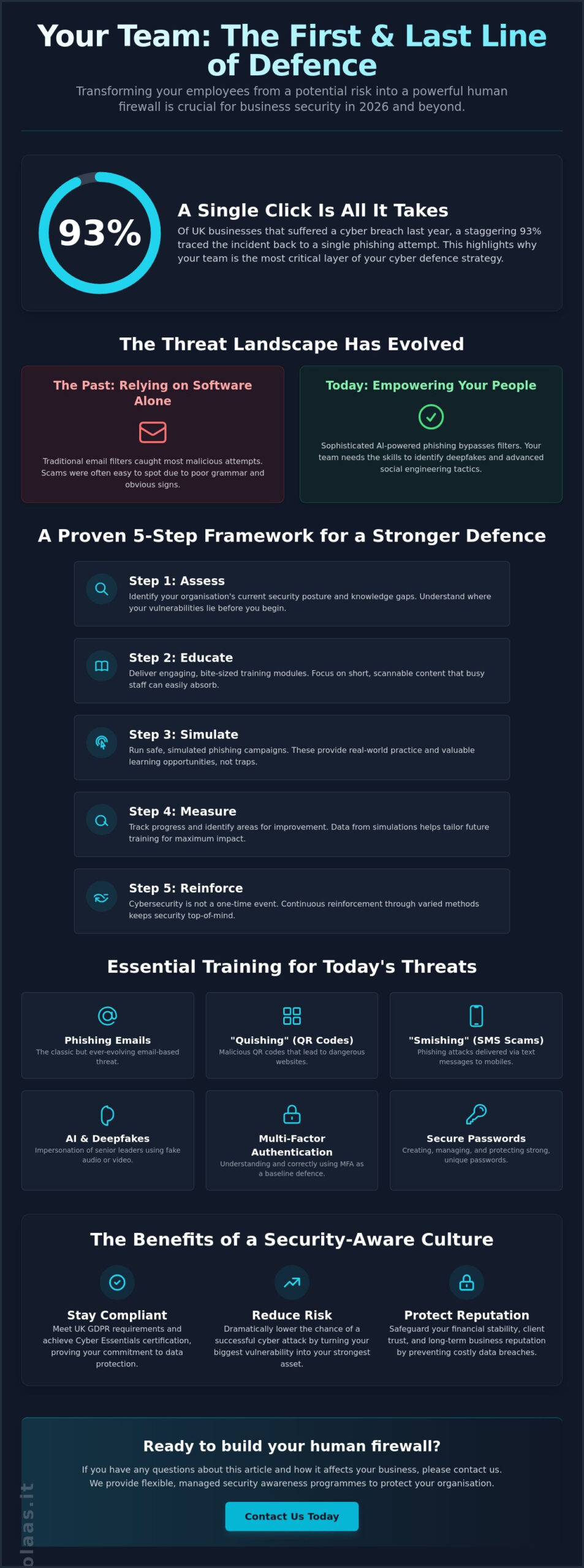
Did you know that 93% of UK businesses that suffered a cyber breach last year trace the incident back to a single phishing attempt? It is a sobering statistic that highlights why your team is often the first line of defence. Despite investing in high-end software, many leaders still feel a sense of dread when they think about an employee accidentally clicking a suspicious link or falling for a clever AI-powered scam. We understand that keeping up with these evolving digital threats can feel like a constant uphill battle, which is why effective employee cybersecurity awareness training is no longer optional; it is a vital part of your business strategy.
The good news is that you don’t have to face these risks alone. This guide will show you how to implement a training programme that actually works, moving beyond simple “tick-box” exercises to create a genuine culture of security. We will explore how to transform your workforce into a robust human firewall, ensuring your business stays compliant with UK GDPR and Cyber Essentials whilst protecting your reputation in 2026. From reducing risky behaviour to mastering the latest AI-driven threats, you will discover the practical steps needed to build a more resilient and confident organisation. It is time to put you back in control.
Key Takeaways
- Learn how to evolve your team into a robust “human firewall” that can identify and neutralise sophisticated AI-powered phishing attempts.
- Discover a proven five-step framework to assess, educate, and reinforce secure habits across your entire organisation.
- See why delivering short, scannable content is essential for ensuring your busy staff actually complete their security modules.
- Understand the benefits of flexible employee cybersecurity awareness training that scales with your business without the burden of long-term contracts.
- Find out how to achieve measurable results in risk reduction whilst staying ahead of UK GDPR and Cyber Essentials requirements.
The Critical Role of Employee Cybersecurity Awareness Training in 2026
Employee cybersecurity awareness training is a strategic programme designed to educate your staff on identifying, avoiding, and reporting digital threats. In 2026, the digital landscape has shifted dramatically. Whilst traditional email filters used to catch most malicious attempts, AI-generated phishing scams now bypass these barriers with ease. These sophisticated attacks use deepfake technology and perfect grammar to trick even the most vigilant users. When software fails, your team remains the final line of defence.
This is known as the “Human Firewall” concept. A single “wrong click” can lead to devastating financial losses and long-term reputational damage for any UK business. By fostering Security awareness across your organisation, you turn a potential vulnerability into your greatest asset. It’s about giving your people the tools they need to protect the business they help build.
Moving Beyond the Human Error Narrative
It’s time to stop blaming staff for mistakes. Instead, we should focus on empowering them as active defenders. A positive security culture encourages transparency; employees should feel comfortable reporting a suspicious link rather than hiding a potential error in fear of reprimand. This culture of empowerment is often bolstered by professional development opportunities, such as those provided by Square Skills, ensuring staff feel valued and digitally competent. Security culture is the collective values and behaviours of an organisation regarding digital safety.
Compliance and Cyber Essentials in the UK
Robust training is a cornerstone of meeting UK GDPR requirements for data protection. It also plays a key role in achieving Cyber Essentials certification, proving to clients and partners that you take their data seriously. Many insurance providers now mandate regular employee cybersecurity awareness training as a condition for cyber liability coverage, making it a financial necessity as much as a security one.
Designing an Effective Training Programme for Your UK Workforce
Creating a successful employee cybersecurity awareness training programme requires a shift from once-a-year lectures to a continuous, dynamic cycle. Busy teams don’t have hours to spare for dry, technical presentations. Instead, modern training must be bite-sized and scannable, allowing staff to absorb vital information in five-minute bursts. We recommend a five-step framework to ensure your investment delivers results: Assess, Educate, Simulate, Measure, and Reinforce.
Relevance is key to engagement. A Finance team member dealing with high-value invoices faces different risks than a Sales executive on the road. By tailoring content to specific departments, you make the lessons feel personal rather than a box-ticking exercise. To combat training fatigue, vary your delivery methods. Mix short videos and interactive quizzes with physical reminders like office posters to keep security top-of-mind without being intrusive. Just as physical tactical readiness is built through realistic scenarios and the right equipment from specialists like Socom Tactical Airsoft, digital defence relies on creating an environment where staff feel prepared for any situation.
Essential Modules: From Phishing to Social Engineering
In 2026, threats have moved beyond simple emails. Your modules should focus on “Quishing” (QR code phishing) and “Smishing” (SMS scams), which target employees on their mobile devices. With the rise of AI, training must also cover how to spot deepfake audio or video calls that impersonate senior leaders. Underpinning all of this is the correct use of Multi-Factor Authentication (MFA) and secure password behaviour, which remain your most reliable baseline defences.
The Power of Simulated Phishing Campaigns
Safe, simulated attacks allow your team to practice their skills in a controlled environment. These simulations shouldn’t be used as a trap to catch people out; they are valuable learning opportunities. When an employee interacts with a simulated threat, they should receive immediate, helpful feedback rather than a reprimand. This data helps you identify individuals who may need more support through managed IT services or bespoke coaching, ensuring no one is left as a weak link in your defence.
How SolaaS Empowers Midlands Businesses with Managed Security Awareness
SolaaS acts as a modern partner for businesses in Coventry, Leicester, Warwick, and Leamington. We move away from the rigid, long-term contracts that often hold companies back; instead, we provide flexible and scalable security solutions. By managing the entire employee cybersecurity awareness training lifecycle, we take the operational burden off your shoulders. This allows you to focus on growth whilst we ensure your team remains a robust defence. We treat training as a core component of our Managed IT Services, ensuring your people and your platform are always in sync.
Bespoke Training for Local Teams
Our bespoke employee cybersecurity awareness training can be delivered on-site or remotely, specifically tailored to the sectors that drive the Midlands economy. Whether you are in manufacturing or retail, our sessions address the unique threats your staff face daily. For example, our Retail Security solutions combine AI theft prevention with staff awareness to create a comprehensive safety net. We also provide third-party validation and detailed reporting, giving you the evidence needed for board-level peace of mind and regulatory compliance.
Integrating Training with Managed IT Support
Training data helps SolaaS fine-tune your technical defences, such as email filters, based on real-world staff interactions. This proactive approach is vital during a Cloud Migration to ensure secure remote work. A managed IT partner ensures that your technical defences and human awareness evolve at the same pace to meet 2026’s sophisticated threats.
If you have any questions about this article and how it affects your business, please contact us.
Empower Your Team to Lead Your Digital Defence
Protecting your business in 2026 requires more than just the latest software; it demands a team that’s alert, informed, and confident. We’ve explored how moving beyond simple tick-box exercises to a continuous culture of security can transform your staff into a robust human firewall. By implementing tailored employee cybersecurity awareness training, you don’t just meet compliance standards like Cyber Essentials; you build a resilient organisation capable of spotting even the most sophisticated AI-driven scams.
As a Cyber Essentials certified partner with deep expertise in modern communication platforms like Wildix and Xbees, SolaaS is uniquely positioned to support you. We provide the local, hands-on guidance that businesses in Coventry and Leicester need to stay ahead of evolving threats. Whether you’re refining your remote work setup or strengthening your office network, your people are your greatest asset. Let’s make sure they’re also your strongest shield.
If you have any questions about this article and how it affects your business, please contact us.
Frequently Asked Questions
Is free cybersecurity training from the NCSC enough for my business?
While the NCSC’s “Top Tips For Staff” is an excellent baseline, it is rarely enough for businesses navigating the 2026 regulatory landscape. This free resource is great for initial onboarding, but it lacks the persistent testing and simulated attacks needed to build true resilience. With the upcoming Cyber Security and Resilience Bill increasing the pressure on UK supply chains, most organisations require a more robust, managed approach to stay compliant and secure.
How often should my employees undergo cybersecurity awareness training?
We recommend moving away from annual sessions in favour of monthly, bite-sized modules. This approach combats the “forgetting curve” and ensures that employee cybersecurity awareness training remains relevant to current threats. Regular, short engagements keep security at the front of your team’s mind without causing training fatigue, allowing them to absorb new information about evolving AI scams in manageable five-minute bursts.
What is the most common cybersecurity threat to UK employees in 2026?
Phishing continues to be the primary threat, with recent data showing that 43% of UK businesses reported a breach or attack in the last 12 months. While the methods have become more sophisticated through the use of AI, the goal remains the same: tricking staff into revealing credentials or installing malware. Training your team to spot these attempts is the most effective way to prevent the average £5,000 to £7,500 cost of a successful attack.
Can cybersecurity training help us lower our insurance premiums?
Yes, insurers increasingly view employee cybersecurity awareness training as a sign of a well-managed business. By demonstrating that you have a formal training programme and a record of staff completion, you present a much lower risk to the provider. This proactive stance, combined with Cyber Essentials certification, often makes your business eligible for more competitive premiums and broader coverage in your cyber liability policy.
If you have any questions about this article and how it affects your business, please contact us.

Article by
René Wheeler
René Wheeler is Managing Director of SolaaS, bringing over three decades of experience in IT and telecoms. He is a strong advocate for transparency and flexibility, championing monthly contract models that allow businesses to stay agile and in control of their technology. His approach challenges traditional industry practices and puts client outcomes first.