
Cyber Essentials Certification for Small Business: The 2026 Guide
Did you know that 67% of UK small businesses experienced a cyber incident in 2025? It’s a staggering figure that explains why so many of your larger clients are now demanding a cyber essentials certification for small business before they’ll even discuss a contract. If you feel overwhelmed by technical jargon or worried that a single breach could derail everything you’ve built, you’re certainly not alone. Most business owners feel the same pressure to prove their reliability in an increasingly competitive digital marketplace.
The good news is that securing this certification is a powerful way to turn those fears into a genuine strategic asset. This 2026 guide is designed to simplify the entire process, helping you protect your data and win more business with total confidence. We’ll walk you through the new Danzell question set, explain the strict new rules for multi-factor authentication, and provide a straightforward roadmap to making your organisation more resilient. We’re here to act as your expert partner, ensuring you have the tools to thrive in a secure and successful future.
Key Takeaways
- Understand why 2026 is a pivotal year for your security and how this government-backed framework protects you from modern automated threats.
- Learn how a cyber essentials certification for small business can help you win larger contracts and build a reputation as a trusted, secure partner.
- Master the five core technical controls, including firewalls and secure configuration, through a practical and easy-to-follow checklist.
- Discover how to bypass technical confusion with a streamlined, jargon-free roadmap and expert support across Coventry, Leicester, and Warwick.
- Achieve total peace of mind by transforming a complex audit into a simple, managed process that secures your digital future.
What is Cyber Essentials Certification for Small Business?
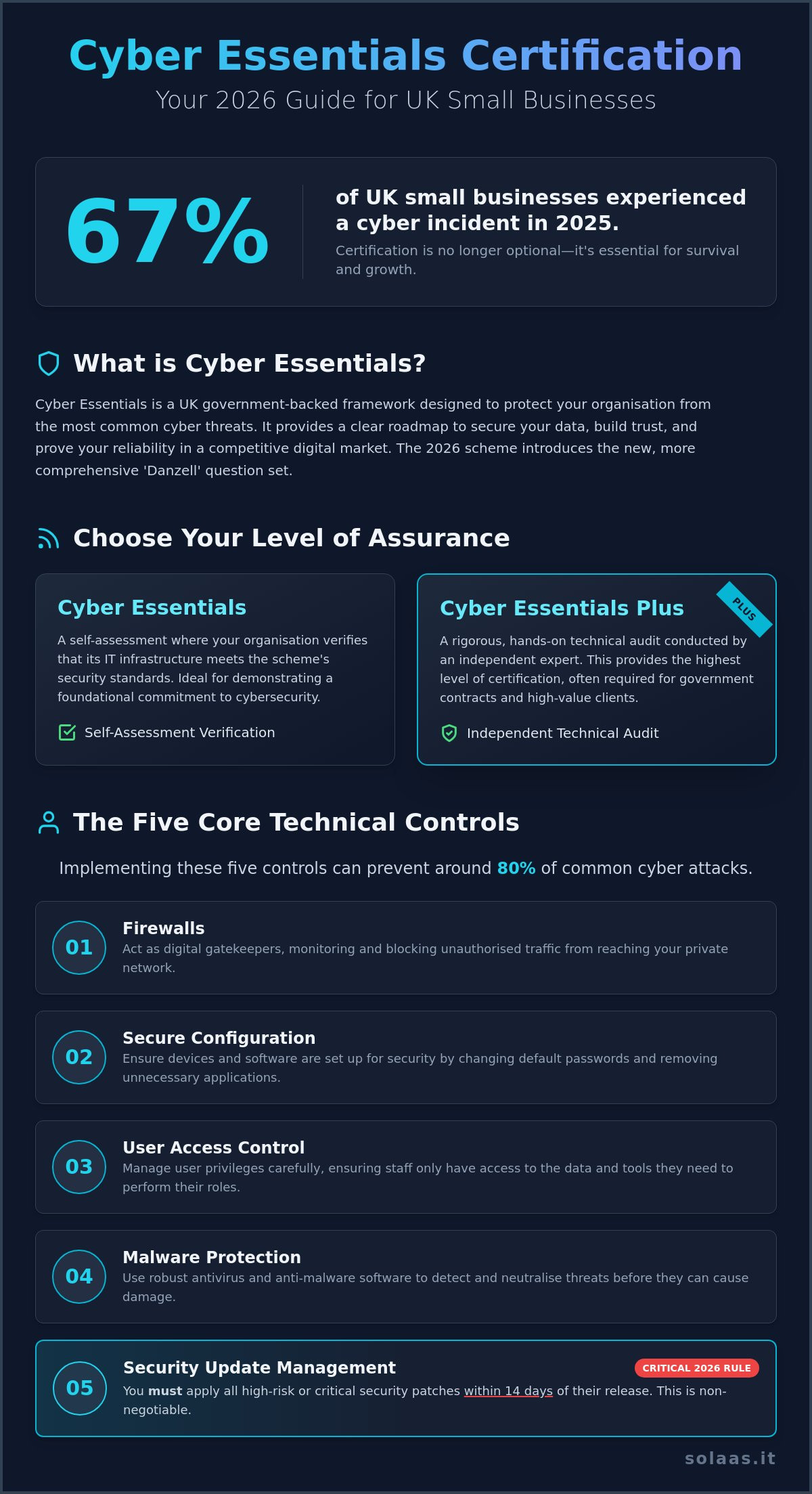
Cyber Essentials is a UK government-backed framework designed to help organisations protect themselves against the most common cyber attacks. Obtaining a cyber essentials certification for small business is no longer just a technical luxury; it’s a fundamental requirement for operating safely in a digital economy. The scheme provides a clear set of controls that, when implemented correctly, shield your business from the vast majority of internet-based threats. As detailed on Cyber Essentials on Wikipedia, the initiative was launched to give businesses a manageable starting point for their security journey.
2026 marks a turning point for the scheme with the mandatory adoption of the “Danzell” question set. This update reflects a world where automated attacks are more frequent and sophisticated. There are two distinct levels to choose from:
- Cyber Essentials: A self-assessment option where you verify that your IT meets the required standards.
- Cyber Essentials Plus: A more rigorous tier that includes a hands-on technical audit by an independent expert to verify your security posture.
Choosing the right level depends on your specific goals, such as bidding for sensitive government contracts or proving your resilience to high-value clients.
While certification covers technical basics, many organisations find that identifying hidden operational vulnerabilities is equally vital; you can learn more about FaultLine Cyber & Security Ltd and their specialist exposure assessments to strengthen your overall resilience.
Why Small Businesses in the UK are Targets
Cyber criminals rarely spend months planning a complex heist on a single firm. Instead, they use automated scripts to scan the internet for “low-hanging fruit”. Think of your digital security like a front door. If it’s left unlocked, a thief will simply walk in. Small businesses are often targeted because hackers assume they haven’t prioritised their cybersecurity. By closing these basic gaps, you make your business a much less attractive target for opportunistic attackers.
The Financial Benefits: Insurance and Tendering
The Five Core Technical Controls: A Practical Checklist
Achieving a cyber essentials certification for small business relies on mastering five fundamental technical controls. These aren’t just tick-box exercises; they represent the frontline of your digital defence. According to the UK Government’s Cyber Essentials Scheme, implementing these basics can prevent around 80% of common cyber attacks. To maintain your status, you’ll need a clear strategy for these five areas:
- Firewalls: These act as digital gatekeepers, monitoring incoming traffic to block unauthorised access to your private network.
- Secure Configuration: Every device should be tailored to your security needs by removing unnecessary software and changing default passwords.
- User Access Control: Manage administrative privileges carefully so only authorised staff can make major system changes.
- Malware Protection: Use robust antivirus software and tools that run suspicious programmes in safe, isolated areas to catch threats before they cause damage.
- Security Update Management: You must apply high-risk or critical patches within 14 days of release. This is a non-negotiable rule for 2026.
Consistently maintaining these technical controls can be a significant undertaking for small teams. Expert firms like AA Network Technologies emphasise that a managed approach to IT security ensures these critical safeguards, from firewalls to patching, are always functioning correctly to protect your business data.
Organising Your Device Management
Begin with a thorough audit of your hardware and software. It’s impossible to protect what you don’t know you have. Creating an asset register helps you track every laptop and server in your fleet. If you’re looking for a simpler way to handle this, our guide on Managed IT Support Services walks you through how professional oversight can streamline your device setup.
Protecting Remote and Mobile Workers
Your security must follow your team wherever they go. The five controls apply equally to staff working from home or using public Wi-Fi. Ensure your Business Mobile Services meet the same strict certification standards as your office desktops. Ongoing maintenance is the secret to a successful cyber essentials certification for small business. If managing this yourself feels like a full-time job, choosing a managed cybersecurity partner like SolaaS Limited can provide the continuous protection your business deserves.
How to Achieve Certification with SolaaS Limited
At SolaaS Limited, we believe that obtaining a cyber essentials certification for small business shouldn’t be a source of stress or confusion. We’ve designed our approach to be entirely jargon-free, acting as your dedicated Cyber Advisor throughout the journey. Because we’re based in the Midlands, we provide a level of personal, local support that national providers often miss. Whether you’re in Coventry, Leicester, or Warwick, our team helps you navigate the IASME Cyber Essentials Certification process with ease.
We don’t just help you tick boxes. Our goal is to foster a culture of continuous security that aligns with broader UK GDPR compliance. This partnership is built on flexibility. SolaaS Limited doesn’t trap you in rigid, long-term contracts; instead, we earn your trust through reliable service and expert guidance. Securing a cyber essentials certification for small business is the first step toward a more resilient future.
Preparing for Cyber Essentials Plus
If you’re aiming for the Plus tier, you’ll face a technical audit. This can be daunting, but we remove the guesswork. SolaaS Limited performs a thorough pre-assessment to identify any gaps before the official auditor arrives. This ensures a first-time pass and saves you the frustration of remediation delays.
Managed Cybersecurity for Peace of Mind
Security isn’t a one-off event. Our Managed IT Support ensures your five core controls stay active and effective automatically. We handle the patching, monitor the firewalls, and manage user access whilst you focus on growing your company. It’s about giving you total control over your digital environment without the technical burden.
If you have any questions about this article and how it affects your business, please contact us: contact us
Secure Your Competitive Edge Today
Securing a cyber essentials certification for small business is about far more than just building a digital defence; it’s a strategic move to unlock new commercial opportunities. By mastering the security standards we’ve explored and staying ahead of the 2026 updates, you’re demonstrating to every prospective client that their sensitive data is in safe hands. This level of trust is the essential foundation for winning larger contracts and fostering successful, long-term partnerships.
SolaaS Limited specialises in UK SME cybersecurity standards and provides dedicated, local support across Coventry, Leicester, Warwick, and Leamington. We pride ourselves on delivering jargon-free IT solutions that empower you to lead your organisation with total confidence. You don’t have to navigate complex technical requirements alone when you have a modern partner committed to your growth and operational resilience. We’re here to ensure your technology works for you, giving you the freedom to focus on what you do best.
If you have any questions about this article and how it affects your business, please contact us, contact us
Frequently Asked Questions
How much does Cyber Essentials certification cost for a small business?
The official assessment fee for a cyber essentials certification for small business is determined by the size of your organisation. IASME sets these prices in tiers, meaning micro-businesses with fewer than ten employees pay a different rate than small or medium-sized firms. These costs cover the certification process itself, whilst any additional support you choose for technical preparation is handled separately to ensure your systems meet the required standards before you apply.
How long does it take to get Cyber Essentials certified?
Most businesses can complete the certification process within one to three weeks depending on their current technical readiness. If your IT infrastructure already aligns with the five core controls, the self-assessment can be submitted and reviewed in just a few days. However, if you need to implement new security measures like multi-factor authentication or update old software to meet the 14-day patching rule, you’ll need to factor in that preparation time.
Can I do Cyber Essentials myself or do I need an IT partner?
You can technically complete the self-assessment alone, but many owners find a cyber essentials certification for small business difficult to navigate without expert guidance. Working with a partner ensures your submission is accurate and that your security measures are actually effective. It’s a smart way to avoid the frustration of a failed application. This collaborative approach gives you total control over your security whilst we handle the complex technical requirements on your behalf.
Is Cyber Essentials a legal requirement for UK businesses?
Cyber Essentials is not a universal legal requirement for all UK companies, but it’s increasingly becoming a commercial necessity. It’s a mandatory requirement for any business bidding for central government contracts that involve handling personal information or providing certain ICT products. Many large private sector organisations also require their suppliers to be certified. Even without a mandate, it remains the best way to prove your commitment to data security and support your broader GDPR obligations.
If you have any questions about this article and how it affects your business, please contact us: contact us

Article by
René Wheeler
René Wheeler is Managing Director of SolaaS, bringing over three decades of experience in IT and telecoms. He is a strong advocate for transparency and flexibility, championing monthly contract models that allow businesses to stay agile and in control of their technology. His approach challenges traditional industry practices and puts client outcomes first